
Figuring out how much house you can afford is about more than the maximum a lender will approve. Real affordability is the payment you can carry comfortably while still living your life, saving, and handling the unexpected. Those are two different numbers, and understanding the gap between them is the key to buying a home you'll enjoy rather than one that stretches you thin. This guide covers how affordability is calculated, what your payment really includes, and how to land on a number that fits.
To put your own figures in, try the affordability mode of our mortgage calculator and our DTI calculator as you read.
There's a difference between what you can borrow and what you should borrow. A lender determines your maximum using ratios and guidelines, but that maximum doesn't know your goals, your habits, or the expenses that never appear on a credit report. Affordability, in the real sense, is the payment that fits your whole life, leaving room to save, to handle a surprise, and to enjoy things beyond your mortgage. The most financially comfortable buyers usually spend somewhat below their maximum. So the right question isn't only how much a lender will allow, but how much you can carry without strain.
A handful of inputs set your affordable price. Your income is the foundation, since your payment has to fit within a reasonable share of it. Your monthly debts matter, because existing obligations like car loans and credit cards reduce what's left for a mortgage. Your down payment affects both your loan size and whether you pay mortgage insurance. Your interest rate shapes the payment on any given loan amount. And the full cost of the payment, not just principal and interest but taxes, insurance, and any association dues, determines what you're really committing to each month. Change any of these and your affordable price moves, which is why a calculator that includes all of them beats a rough guess.
A quick illustration shows how the pieces fit. Say you earn $10,000 a month before taxes and have $500 in existing monthly debt payments. Using the comfortable 36 percent back-end guideline, your total monthly debt budget is $3,600. Subtract your existing $500 in debts, and about $3,100 is available for your full housing payment. That $3,100 has to cover principal, interest, property tax, insurance, and any HOA, so the loan amount it supports depends on the rate and those other costs, but it anchors your budget. Add your down payment to the supportable loan amount, and you have your target home price. These numbers are illustrative, and your real figures will differ, but the logic is exactly how affordability works: start from a comfortable share of income, subtract your debts and the non-loan costs, and what's left sizes your home. Our calculator does this math for you instantly.
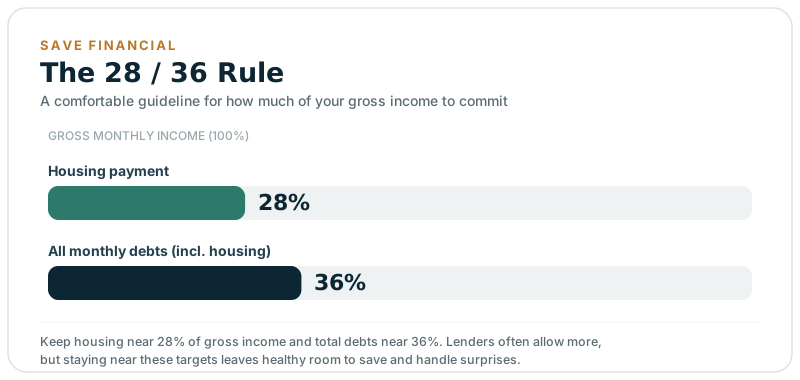
A classic rule of thumb is the 28/36 rule. It suggests keeping your housing payment at or below 28 percent of your gross monthly income, the front-end ratio, and your total debt payments including the mortgage at or below 36 percent, the back-end ratio. These are conservative, comfortable targets, and staying near them tends to leave healthy breathing room. Lenders will often approve higher ratios, commonly up to around 43 to 50 percent on the back end, especially with strong credit or reserves. The gap between the comfortable 36 percent and the lender's higher ceiling is exactly the space where you decide how much of your budget you want committed to housing. Another rough guide is that homebuyers often land somewhere around three to five times their annual income in home price, though that varies widely with your down payment, debts, and rates.
Affordability trips people up when they think only about principal and interest. Your real monthly housing payment includes several parts, often abbreviated PITI, plus more. There's principal and interest, the loan payment itself. There's property tax, which in California is based on your purchase price. There's homeowners insurance. If your down payment is under 20 percent on a conventional loan, there's mortgage insurance. And if the home is in an association or a newer community, there may be HOA dues or Mello-Roos. Add these up and your true payment can be meaningfully higher than the principal-and-interest figure, which is why affordability should always be measured on the full payment. Our calculator includes all of these so your number is realistic.
Your interest rate has a large effect on affordability, because it changes the payment on every dollar you borrow. When rates are lower, the same monthly payment supports a larger loan, so you can afford more house. When rates are higher, that same payment buys less. This is why affordability shifts with the market even when your income and down payment stay the same. It's also why comparing lenders and getting a competitive rate directly expands your budget, and why you shouldn't anchor to a home price you calculated at a different rate. If rates move while you're shopping, your affordable price moves with them, and we'll keep your budget current so you're never surprised. A better rate is one of the most direct ways to afford more without changing anything else about your finances.
Here's the honest heart of affordability. When you get pre-approved, you'll receive a maximum, the most a lender will let you borrow. It's tempting to treat that as your target, but it's a ceiling, not a goal. Buying at your absolute maximum can leave you house-poor, with little room for savings, emergencies, or the things you enjoy, and in high-cost California the maximum can be a real stretch. A comfortable budget usually sits below the maximum, at a payment you're genuinely happy to make every month. We'll show you your maximum, but we'll also help you find the number that fits your life, because the goal is a home you can enjoy, not one that owns you.
Owning a home costs more than the mortgage payment, and a realistic affordability picture accounts for it. Budget for maintenance and repairs, since things break and homes need upkeep, often estimated at a small percentage of the home's value per year. Factor in utilities, which can be higher than in a rental, and furnishings for a larger space. Remember that property taxes and insurance can rise over time. And keep an emergency fund separate from your down payment, so a surprise doesn't become a crisis. Buyers who plan for these costs enjoy their homes; those who forget them feel squeezed. True affordability includes the cost of ownership, not just the cost of the loan.
Affordability often comes up as a comparison to renting, and it's a fair way to frame the decision. Comparing your current rent to a full mortgage payment, taxes, insurance, and upkeep included, tells you how much more or less owning would cost month to month. But the comparison isn't only about the monthly number. Owning builds equity over time, and in California's history of rising values, that equity has been meaningful, while rent buys no ownership. On the other hand, owning ties up your down payment and carries maintenance and transaction costs that renting doesn't. There's no universal answer, only what fits your finances and plans. If a comfortable mortgage payment is close to what you'd pay in rent, buying often makes sense; if it's a big stretch, waiting or buying smaller may be wiser. We help you compare honestly rather than assume owning is always the move.
California's prices make affordability the central challenge, and they raise the income needed to support a given home. But you have levers. A larger down payment lowers your payment and can remove mortgage insurance. Paying down monthly debts frees up room in your ratios. Choosing the right loan program, from low-down options to alternative income programs, can expand what you qualify for. And looking at condos, smaller homes, or more affordable areas stretches your budget further. The question in California usually isn't whether you can afford to buy, but how to structure the purchase so the payment fits comfortably. That structuring is exactly where good guidance pays off.
If you want to increase your affordable price, a few moves help. Increase your down payment, which lowers the payment and can drop mortgage insurance. Pay down debt, especially anything with a monthly payment, to free up room in your DTI. Improve your credit, since a better rate lowers your payment on the same loan. Choose the right loan program for your profile, since the cheapest and most flexible option depends on your situation. And shop your rate, because a lower rate directly raises what you can afford. Often a combination of two of these meaningfully expands your budget, and we'll show you which gives you the most for the least effort.
The fastest way to see your number is to run it. The affordability mode of our mortgage calculator turns your income, debts, down payment, and rate into a home price, and our DTI calculator shows how your ratios look. These give you a solid starting estimate. From there, a conversation refines it, because we can factor in your full situation, compare loan programs, and help you separate your maximum from your comfortable budget. A calculator gives you a number; an advisor helps you choose the right one.
The single most useful affordability principle is not to buy at your absolute maximum. Being house-poor, where the payment consumes so much that you can't save or breathe, takes the joy out of homeownership. Leave yourself margin. A payment that felt fine on paper can feel heavy when a car breaks down or income dips, so build in room. It's better to buy a home you comfortably afford and love than a bigger one that stresses you. We'd rather help you find a payment you're happy with than the largest one you qualify for, because your long-term comfort matters more than the last dollar of approval.
How much house can I afford on my income? It depends on your income, monthly debts, down payment, and rate, measured against your full payment including taxes and insurance. A common comfortable guideline is keeping housing near 28 percent of gross income and total debts near 36 percent, though lenders allow higher.
What is the 28/36 rule? A guideline suggesting your housing payment stay at or below 28 percent of gross monthly income and your total debt payments at or below 36 percent. These are conservative, comfortable targets; lenders often allow higher.
Should I buy at the top of my pre-approval? Usually not. Your pre-approval is a maximum, not a target, and buying at the top can leave you house-poor. A comfortable budget typically sits below the maximum.
What costs should I include in affordability? The full payment, principal, interest, property tax, insurance, mortgage insurance if applicable, and any HOA or Mello-Roos, plus ongoing costs like maintenance, utilities, and an emergency fund.
How many times my income can I borrow? A rough guide is three to five times your annual income, but it varies widely with your down payment, debts, and rate. A calculator on your actual numbers is far more accurate.
How can I afford more house? Increase your down payment, pay down monthly debts, improve your credit, choose the right loan program, and shop your rate. A larger down payment and lower debt often help the most.
Does my down payment affect how much house I can afford? Yes. A larger down payment lowers your loan amount and payment, and reaching 20 percent on a conventional loan removes mortgage insurance, all of which increase your affordable price.
What does it mean to be house-poor? It means your housing payment consumes so much of your income that you struggle to save or cover other needs. Avoiding it means buying comfortably below your maximum.
Is it cheaper to rent or buy? It depends on your market, your rate, how long you'll stay, and the full cost of owning versus renting. Buying builds equity but ties up your down payment and adds maintenance costs. Comparing your rent to a full mortgage payment, not just principal and interest, is the honest way to decide.
How do interest rates affect how much house I can afford? A lot. A lower rate lets the same monthly payment support a larger loan, so you can afford more house, while a higher rate buys less. Your affordable price moves with rates even if your income and down payment stay the same.
Affordability is where honest advice matters most, because it's easy to qualify someone for more than they should spend. We help you find the payment that fits your life, not just the maximum a lender allows, and we compare loan programs so your money buys as much comfortable home as possible. If you want to stretch your budget wisely, we'll show you the levers, and if a smaller payment is the smarter move, we'll say so. Start with our pre-approval page to turn estimates into real numbers.
You're welcome to verify our license on NMLS Consumer Access (NMLS #377740, DRE #01875766).
Newport Beach (headquarters) Save Financial, 4000 MacArthur Blvd, Suite 600, Newport Beach, CA 92660, (949) 379-5320
Marina del Rey Save Financial, 13763 Fiji Way, Suite EU2, Marina del Rey, CA 90292, (310) 759-4757
Run the affordability calculator for a starting estimate, then reach out and we'll refine it with your full picture and help you separate your maximum from the payment you'll actually enjoy.
If you're buying anywhere in California, contact Save Financial. Call our Newport Beach office at (949) 379-5320 or request your free pre-approval to get started.
This page is general educational information, not financial advice or a commitment to lend. Affordability depends on your full financial situation, and approval, loan programs, rates, and terms depend on borrower qualifications and lender guidelines. Save Financial is a California-licensed mortgage brokerage (NMLS #377740, DRE #01875766). Equal Housing Opportunity.
Save Financial is a California-licensed mortgage brokerage (NMLS #377740, DRE #01875766) with offices in Newport Beach and Marina del Rey. Call (888) 703-1840 or request your free rate quote. Rates and terms are subject to change and depend on borrower qualifications and lender approval. Equal Housing Opportunity.