
Mortgage closing costs in California typically run about 2 to 5 percent of the loan amount, and they catch a lot of buyers off guard because they're separate from the down payment. Understanding what each cost is, who customarily pays it, and how to reduce it can save you real money and remove the surprises from your closing day. This guide breaks down every major closing cost, explains how escrow works in California, and shows you how to read the documents that lay it all out.
Save Financial is a California-licensed mortgage brokerage, and we give every borrower a clear, itemized picture of their costs up front. Once you understand where the money goes, you can plan for it and, in many cases, lower it.
Closing costs are the fees and prepaid expenses required to finalize your mortgage and transfer the home. They're paid at closing, on top of your down payment, and they fall into three broad groups: lender fees, third-party services, and prepaid items and reserves. Some are fixed, some scale with your loan size, and some are negotiable or can be covered by a credit. If you'd like a quick number for your situation, our closing cost calculator estimates yours in seconds, and this guide explains what's behind each line.
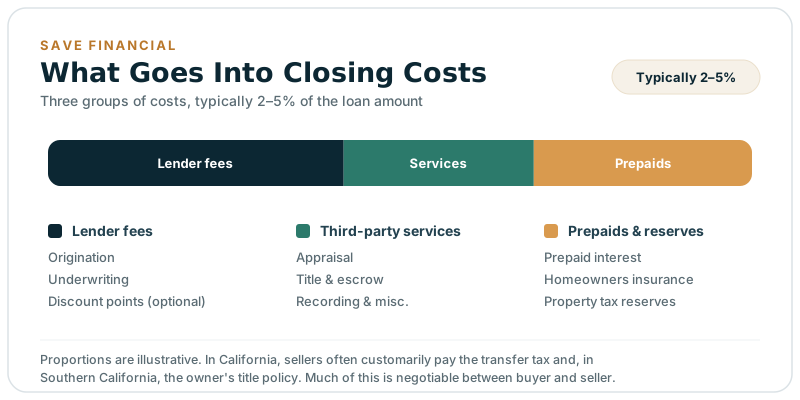
These are what the lender charges to originate and process your loan.
The origination fee compensates the lender for making the loan and is often expressed as a percentage of the loan amount. Processing and underwriting fees cover the work of preparing and reviewing your file, usually as flat charges. Discount points are optional: paying points up front lowers your interest rate, which can be worth it if you'll keep the loan long enough to break even. Because lender fees vary from one lender to the next, they're one of the biggest reasons comparing lenders pays off, and it's a core reason to work with a broker who shops many of them.
These fees go to outside providers, not the lender, though the lender arranges many of them.
The appraisal pays a licensed appraiser to determine the home's value, which the lender requires. The credit report fee covers pulling your credit. Title insurance protects against defects in the property's title, and there are two policies: a lender's policy, which protects the lender, and an owner's policy, which protects you. The escrow or settlement fee pays the neutral escrow company that handles your closing, which we'll cover in depth below. Recording fees pay the county to record the new deed and mortgage, and a notary fee covers notarizing your signing. Some purchases also include a pest or termite inspection, which certain loan programs require. Many of these third-party costs are shoppable, meaning you can sometimes choose the provider and compare prices.
This group covers amounts collected in advance so your taxes and insurance stay current.
Prepaid interest covers the interest from your closing date to the end of that month, since your first regular payment comes later. Your first year of homeowners insurance is often paid at closing. And property tax reserves set aside a few months of taxes so the lender can pay them on your behalf when due.
That last piece introduces the impound account, also called an escrow account, which is a common source of confusion because the word "escrow" means two different things in a California transaction. During the purchase, escrow refers to the neutral third party handling the closing. After closing, an impound or escrow account refers to the account your lender uses to collect a portion of your taxes and insurance with each monthly payment, then pays those bills for you when they come due. Some loans require an impound account, and some let you waive it. We'll explain which applies to your loan and what it means for your monthly payment.
California handles closings differently from many states, so this deserves its own section, especially since escrow fees are part of your costs. In California, a neutral escrow company, sometimes a division of the title company, acts as the middleman for the transaction. Escrow holds the funds and documents, makes sure every condition of the purchase is met, and disburses money to the right parties only when everything is in order. The escrow or settlement fee pays for this service.
Escrow protects everyone. Your funds aren't released until the title is clear and the loan is ready, the seller isn't paid until the transfer is proper, and the lender's money is protected. The escrow fee is a legitimate and important part of a California closing, and it's often split between buyer and seller by local custom, though that's negotiable in the contract.
Closing cost customs vary by region within California, and knowing them helps you negotiate. By tradition, the seller often pays the county transfer tax and, in Southern California, frequently the owner's title insurance policy, while the buyer typically pays lender fees, the lender's title policy, their share of escrow, and their prepaids. In parts of Northern California, some of these customs flip, with buyers more often paying for owner's title. None of this is fixed law; it's local custom, and everything is negotiable in the purchase agreement. Some cities, including Los Angeles, Santa Monica, and Culver City, add their own transfer taxes on top of the county's, and Los Angeles has an additional tax on high-value property sales. Because these customs and local taxes vary, we confirm exactly what you'll owe for your city and your deal.
Two documents govern your closing costs, and knowing how to use them puts you in control.
The Loan Estimate, or LE, is a standardized three-page form you receive shortly after applying. It lays out your estimated rate, payment, and closing costs in a consistent format, which is what makes it so powerful: because every lender uses the same form, you can put two Loan Estimates side by side and compare them directly. This is the single best tool for shopping lenders on cost, and we encourage it.
The Closing Disclosure, or CD, is the final version you receive at least three business days before closing. By law, you get those three days to review it and compare it against your Loan Estimate, so there are no surprises at the table. Reviewing the CD carefully, and asking about any change from your LE, is one of the smartest things a borrower can do. We walk you through both documents so you understand every number.
Your loan program adds a few costs of its own at closing. An FHA loan includes an upfront mortgage insurance premium, usually financed into the loan rather than paid in cash, plus ongoing monthly mortgage insurance. A VA loan includes the VA funding fee, also typically financed, which is waived for veterans with a service-connected disability. A conventional loan with less than 20 percent down adds private mortgage insurance to your payment, though there's no large upfront premium. And a jumbo loan may involve a second appraisal on very high-value homes, adding to your third-party costs. These program-specific items sit alongside the standard closing costs, and we factor them into your estimate so nothing is a surprise. Choosing the right loan type affects not just your rate but your closing costs, which is part of what we compare for you.
It helps to see the whole picture, because closing costs are only one piece. Your total cash to close is your down payment plus your closing costs, minus any seller or lender credit. Beyond that, it's wise to keep a cash reserve after closing, and some loan programs require a couple of months of payments held in reserve. So when you're planning, budget for all three: the down payment, the closing costs, and a cushion. Seeing the full number early prevents the common late-stage stress of realizing the cash needed is more than the down payment alone. We build this complete figure with you at the start, so you're saving toward the right target rather than a partial one.
You have more control over closing costs than you might think.
Compare lenders using their Loan Estimates, since lender fees and pricing vary and the spread can be significant. Negotiate a seller credit in your offer, where the seller contributes toward your closing costs, which is common and can cover a meaningful share. Consider a lender credit, where you accept a slightly higher rate in exchange for the lender covering some costs, lowering your cash to close. Shop your title and escrow providers where allowed, since those costs can differ. And ask about no-cost options, understanding that "no cost" usually means the costs are absorbed into the rate rather than eliminated. We'll show you which of these makes sense for your situation and run the tradeoffs in real numbers.
Refinancing has closing costs too, even though there's no down payment. You'll pay many of the same lender and third-party fees, plus prepaids, generally in the same 2 to 5 percent range. The key question on a refinance is whether the savings justify the costs, which comes down to your break-even point: how many months of lower payments it takes to recover the closing costs. On a rate-reduction refinance, we run that math so you only proceed when it clearly pays off. You can often roll refinance costs into the loan rather than paying them out of pocket, which we'll factor into the decision.
Not every cost of buying shows up as a formal closing cost, and it helps to plan for the extras. If your new home has a homeowners association, there may be a transfer or setup fee to move the membership into your name, and you may prepay the first dues. Some buyers purchase a home warranty for peace of mind, and there are practical costs like moving and any immediate repairs or furnishings. These aren't lender charges, so they won't appear on your Loan Estimate, but they're real, and budgeting for them keeps your first months in the home comfortable rather than tight. We flag the likely ones for your purchase so your overall plan is realistic.
Most closing costs are paid at closing, through escrow, as part of your total cash to close, which is your down payment plus closing costs minus any credits. A few costs come earlier, like the appraisal fee, which you often pay when it's ordered. You'll see your estimated cash to close on your Loan Estimate and the final figure on your Closing Disclosure, and you'll typically wire those funds to escrow before signing. We make sure you know the exact amount and timing well in advance, so there's no scramble at the end.
How much are closing costs in California? Typically about 2 to 5 percent of the loan amount, covering lender fees, third-party services, and prepaid reserves. The exact figure depends on your loan size, lender, and county.
Are closing costs separate from the down payment? Yes. Closing costs are paid in addition to your down payment. Your total cash to close is the down payment plus closing costs, minus any seller or lender credit.
Who pays closing costs in California, the buyer or seller? Both pay costs. By custom the seller often pays the transfer tax and, in Southern California, the owner's title policy, while the buyer pays lender fees, the lender's title policy, escrow share, and prepaids. Everything is negotiable in the contract.
What is the escrow fee? The escrow fee pays the neutral escrow company that handles your California closing, holding funds and documents and disbursing them when all conditions are met. It's often split between buyer and seller by custom.
What is the difference between escrow and an impound account? During the purchase, escrow is the neutral party handling the closing. After closing, an impound or escrow account is where your lender collects part of your taxes and insurance each month and pays those bills for you.
How can I lower my closing costs? Compare lenders using their Loan Estimates, negotiate a seller credit, consider a lender credit, shop title and escrow where allowed, and ask about no-cost options. We'll show you which fits.
What is a Loan Estimate? A standardized three-page form you receive after applying that lays out your estimated rate, payment, and closing costs. Because every lender uses the same format, it's the best tool for comparing lenders on cost.
Do refinances have closing costs? Yes. Refinances carry many of the same fees, generally 2 to 5 percent, with no down payment. The question is whether the savings justify the cost, which comes down to your break-even point.
Closing costs are where a transparent lender earns your trust. We give you a clear, itemized estimate up front, explain every fee in plain language, and compare lenders so you're not overpaying on the costs you control. We'll also show you how to use seller and lender credits, and we'll review your Loan Estimate and Closing Disclosure with you line by line so there are no surprises.
Our approach is education first. We'd rather you understand your costs and question them than be caught off guard at the table. You're welcome to verify our license on NMLS Consumer Access (NMLS #377740, DRE #01875766) before we begin.
Newport Beach (headquarters) Save Financial 4000 MacArthur Blvd, Suite 600 Newport Beach, CA 92660 (949) 379-5320
Marina del Rey Save Financial 13763 Fiji Way, Suite EU2 Marina del Rey, CA 90292 (310) 759-4757
The best way to plan is to see your real numbers. Try our closing cost calculator for a quick estimate, then reach out and we'll give you a detailed, itemized figure for your specific loan and county.
If you're buying or refinancing anywhere in California, contact Save Financial. As a California brokerage that compares lender costs and explains every fee, we'll make sure you know exactly what you'll pay and how to lower it. Call our Newport Beach office at (949) 379-5320 or request your estimate to get started.
Closing costs are estimates that vary by lender, title and escrow provider, county, loan program, and negotiated credits, and are subject to change until finalized on your Closing Disclosure. This page is general information, not a Loan Estimate or commitment to lend. Save Financial is a California-licensed mortgage brokerage (NMLS #377740, DRE #01875766). Equal Housing Opportunity.
Save Financial is a California-licensed mortgage brokerage (NMLS #377740, DRE #01875766) with offices in Newport Beach and Marina del Rey. Call (888) 703-1840 or request your free rate quote. Rates and terms are subject to change and depend on borrower qualifications and lender approval. Equal Housing Opportunity.